


The 2027 Conference Starts Now
Why earlier conversations give event planners greater choice
Conference planning often begins with availability: the date, the bedrooms, the meeting room.
Yet securing space is only one reason to start early. Time gives organisers greater flexibility around format, budget and destination, while allowing the venue team to understand what the event needs to achieve before the programme becomes fixed.
With 2027 conference calendars already taking shape, Mark Moynihan, Group Business Development Manager at The iNUA Collection, and Judy Hutton, Director of Sales at voco Belfast, discuss what planners should be considering now, how expectations are changing and why the most productive venue relationships often begin well before a contract is signed.
Lead Time Buys Choice, Not Just Availability
For Mark Moynihan, one word captures the advantage of forward planning:
Predictability
Across The iNUA Collection, Mark is seeing a healthy pipeline of residential and non-residential events, alongside growing interest in longer-term partnerships rather than individual bookings. One recent client, for example, contracted events across Radisson Blu hotels in Cork, Sligo and Limerick for the next three years. That level of forward planning gives the organiser greater visibility over dates, rates and requirements. For the hotel, it allows teams to understand the programme properly, allocate resources and develop a relationship that can improve with each event.
Early planning is much more than simply securing the preferred date,” Mark explains. “The commercial reality is that both the client and the hotel benefit from greater flexibility”.
Not every enquiry arrives a year in advance. Mark is also seeing strong short-lead demand, particularly within the pharmaceutical and healthcare sectors, where the ability to respond quickly can influence the venue decision. The appropriate lead time ultimately depends on scale. A small meeting may be organised within weeks. Training programmes involving accommodation need greater coordination, while a large residential conference taking substantial bedroom inventory over several days may benefit from a lead time of 12 to 16 months or longer. As complexity increases, the value of having time on your side increases with it.
Start With the Outcome
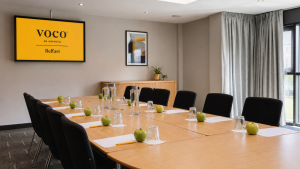 Experienced planners rarely begin with a room layout. They begin with the reason people are gathering. Is the objective to launch a product, deliver training, increase attendance, strengthen internal culture or give a distributed team meaningful time together? Once that purpose is clear, decisions around destination, venue, accommodation and programme become easier to assess.
Mark sees this as one of the clearest differences between efficient conference planning and a brief that becomes unnecessarily complicated. Strong planners establish the objective early, involve the right internal stakeholders and use that shared purpose to guide later decisions. Senior leaders, finance teams, operational colleagues and subject specialists may approach the same event from different perspectives. The planner’s role is to incorporate those priorities without losing sight of what delegates ultimately need from the gathering. As Mark puts it, the best planners simply: “Get it.”
A Floor Plan Only Tells Part of the Story
For Judy Hutton, Director of Sales at voco Belfast, venue selection still requires something that cannot be fully communicated through a proposal document.
A floor plan tells you how many people fit in a room. It doesn’t tell you how a room feels once it’s full.
voco Belfast sits within Belfast’s Gasworks district, where the city’s industrial heritage meets a modern business quarter. For Judy, the location contributes to the event, although the relationship between organiser and venue is equally important. A venue may meet every capacity and technical requirement on paper, yet still be wrong for the programme once the flow of the event, arrival experience and interaction between delegates are considered. This becomes particularly relevant for professional meetings, association events, training programmes and residential conferences, where organisers often need formal meeting space alongside less structured opportunities for conversation.
What a chart can’t show is the level of hands-on and personal attention a focused sales and events team can provide,” Judy says.
The important question is therefore not simply which room a client has requested, but why that particular room or format appears in the brief.
From Venue Search to Working Partnership
The earlier a venue becomes involved, the greater its opportunity to contribute useful experience.
When we’re brought in early, we’re not just filling a brief. We can shape it,” Judy explains.
That might involve suggesting a different room configuration, highlighting a city event that could affect transport or accommodation, recommending a local supplier, or challenging an element of the schedule because experience suggests another approach will work better. A recent voco Belfast client illustrates the value of that continuity.
The organisation planned three very different occasions through one hotel partnership: a formal corporate briefing, a sports hospitality event and a relaxed social gathering. Rather than treating each event as an entirely separate brief, the hotel adapted the same spaces to suit the changing purpose. A boardroom became an informal match-day setting with screens and relaxed seating, before changing again for a social event incorporating bespoke décor, a tailored menu and a tasting experience with a local distillery. The flexibility of the space helped, although Judy identifies continuity as the greater advantage. The same hotel team remained involved throughout and accumulated a working knowledge of the client, rather than restarting the relationship with each booking. That familiarity can make subsequent events easier to plan and stronger to deliver.
Belfast Moves Up the Conference Shortlist
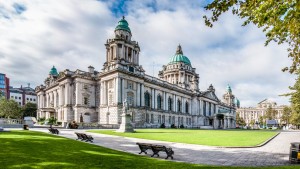
Forward planning is particularly noticeable in Belfast, where Judy is already receiving enquiries extending well beyond 2027. The city’s appeal for meetings and events combines connectivity and walkability with a destination experience that continues once delegates leave the conference room. Its industrial history, regeneration and changing cityscape also give event planners material they can incorporate into a wider programme.
Belfast isn’t just a backdrop for your conference,” Judy says. “It is a story you can put in front of your own people.”
A walking experience, local food and drink, an evening in the city or collaboration with a Belfast business can give delegates a stronger connection with the location. For organisations investing in face-to-face gatherings, that connection matters. The destination should contribute something that could not have been replicated through an online meeting.
How the Conference Brief Is Changing
The questions organisers ask hotels are changing. Flexibility remains important, particularly around room layouts and programme changes, while reliable technology and hybrid capability are increasingly treated as standard requirements.
Wellbeing is also entering the brief earlier. Natural light, suitable breakout areas, the quality of food and opportunities to step away from the main programme can all influence how delegates experience a full conference day. Sustainability has moved further into the commercial conversation too. Mark notes that clients increasingly ask for evidence rather than broad commitments, including information on energy performance, waste reduction, environmental credentials and recognised accreditation. For hotels, sustainability is therefore becoming part of the venue assessment itself, particularly for organisations with their own reporting requirements or environmental targets.
Where the Budget Can Have Greater Impact
Asked where planners should invest, Mark’s answer is immediate: “Food”.
 Conference catering offers an opportunity to connect delegates with the destination rather than treating food as an interruption between sessions. Local produce can locate an event geographically: Cork ingredients on a conference menu in Cork, for example, or produce from Monaghan incorporated into a programme taking place there. Small decisions of this kind help an event feel connected to its surroundings, which matters increasingly when organisations are asking what an in-person meeting can offer that a screen cannot. Effective conference planning does not always require adding more to the programme. Often, a smaller number of well-considered choices have greater impact.
Cost and Value Are Not the Same Thing
Judy sees rate-led venue selection as one of the more common planning mistakes. A lower room hire cost does not necessarily represent better value if the location complicates delegate travel, responses are slow, the programme flows poorly or the organiser has to spend additional time resolving operational issues. It is one reason she continues to recommend visiting shortlisted venues in person.
Nothing beats an in-person site visit to feel the venue, not just see it.
For a residential conference, the organisation is investing far beyond the meeting-room rate. Delegates may be travelling significant distances, staying overnight and giving one or several working days to the event. The more useful question becomes: What will this venue help the organisation achieve?
When Should You Start Planning a 2027 Conference?
There is no single lead time that applies to every event, although larger and more complex programmes generally benefit from beginning earlier. For a substantial residential conference, starting discussions 12 to 16 months ahead can preserve significantly more choice around dates, bedroom availability, rates and programme structure. Smaller meetings can operate on shorter timelines, while organisations planning multi-property programmes, recurring conferences or major association events may benefit from looking considerably further ahead.
Judy’s advice for organisations considering 2027 is simple: “It isn’t too early – in fact, hurry up.”
Beginning the conversation does not require every detail to be settled. Mark recommends establishing the objective, likely delegate numbers, bedroom requirements and main priorities first. From there, planners can identify suitable destinations and venues while enough flexibility remains to improve the brief. The advantage of planning ahead is not simply securing the preferred ballroom. It is preserving choice: around date, destination, format and budget, while giving the people responsible for delivering the event enough time to understand what it is intended to accomplish. Mark believes the strongest events in 2027 will succeed because: “They will form a sense of belonging and community.” That outcome begins long before the first delegate arrives.
Planning a Conference or Event for 2027?
The iNUA Collection works with organisations planning conferences, residential meetings, training programmes, association events and multi-property programmes across Ireland, while voco Belfast provides a further option for organisations considering Northern Ireland. Early conversations can help establish the right location, format and lead time before the brief becomes fixed.
For conference, residential event and venue enquiries:
Mark Moynihan
Group Business Development Manager | The iNUA Collection
E: mark@inuahospitality.ie
W: inua.ie
Judy Hutton
Director of Sales | voco Belfast
E: judy.hutton@vcbelfast.com
W: vocobelfast.com